


Brand
Power supply
Power
IP Protection
Price

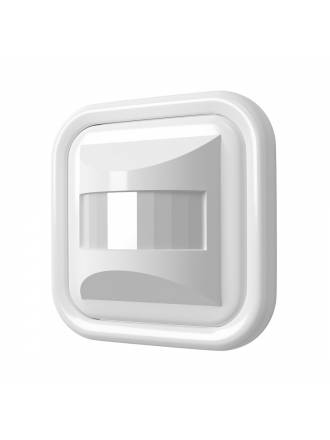


Double surface PIR door/hand sensor for 12V/24V LED strips
- -20%
- New

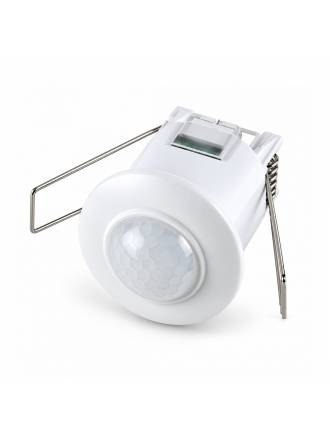
Recessed Mini Infrared Motion Sensor 120°/360° 200W IP44
- -25%
- New

Recesed Infrared Motion Sensor 360° 600W IP65
- -25%
- New
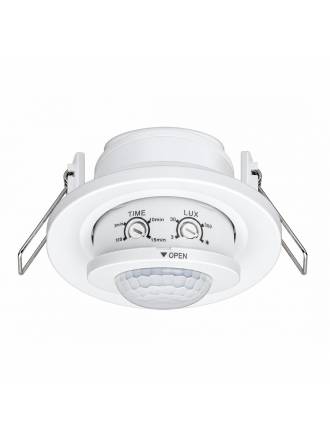
Adjustable Recesed Infrared Motion Sensor 300W
- -25%
- New

Recessed Infrared Motion Sensor for 12V/24V LED Strips
- -25%
- New


Surface Infrared Motion Sensor 360° 300W IP44
- -25%
- New

Double recessed PIR door/hand sensor for 12V/24V LED strips
- -20%
- New
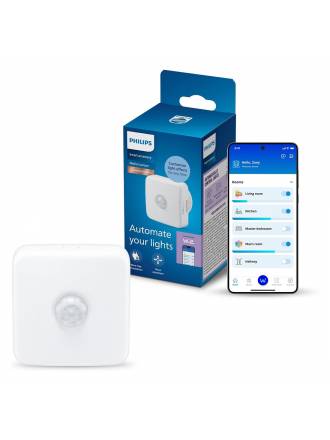
Motion sensors for lighting
Motion sensors for automatic lighting control
Motion sensors for lighting allow lights to switch on and off automatically when movement or presence is detected, reducing the need to use a manual switch and helping to avoid unnecessary energy consumption. They are especially practical in hallways, staircases, garages, entrances, communal areas and outdoor spaces where light is only needed at certain times.
In our catalogue you will find surface-mounted and recessed PIR motion sensors with different detection angles and ranges. Ceiling-mounted models with 360° detection can cover a wide area around the sensor, while 180° wall-mounted sensors are particularly useful for entrances, façades and passage areas. We also offer options for indoor use and models designed for outdoor installations.
Before choosing, it is worth considering where the sensor will be installed, the area you want to cover and the wattage of the lights you plan to connect. Many sensors also allow you to adjust how long the light remains on and set the ambient light level at which the sensor should activate.
Find the motion sensor that best suits your installation and enjoy more convenient, automatic and efficient lighting.

Which motion sensor should I choose to switch on the lights?+
The first thing to consider is where you are going to install it and what area you want to cover. For ceiling installation, a 360° sensor is usually a good option because it detects movement around the installation point. On a wall, entrance or façade, a 180° model may be more suitable for monitoring a specific area.
It is also worth checking whether the sensor is designed for indoor or outdoor use, its detection range and recommended installation height and, especially, the maximum load it supports. If it is going to control LED lighting, always check the maximum load specified specifically for this type of light. For outdoor installation, you should also take the IP protection rating into account.
Our advice: if you are going to control several LED luminaires with a single sensor, pay particular attention to the maximum LED load supported. And if it is installed outdoors, also make sure that the IP rating is suitable for the location where it will be fitted.
What IP rating does an outdoor motion sensor need?+
The required IP rating will depend on where the sensor is going to be installed and how exposed it will be to water and dust. A sensor installed under a porch does not need the same level of protection as one mounted directly on a façade exposed to rain.
In our catalogue you will find, for example, models with an IP65 rating, suitable for outdoor installations where there may be greater exposure to water and dust.
How can I prevent the sensor from switching on the light during the day?+
Many sensors include a light level or lux adjustment that allows you to set the ambient light level at which the lighting should be activated.
This means the sensor can continue detecting movement during the day without switching on the lights while there is sufficient natural light.
Our advice: adjust the lux level once the sensor has been installed and carry out a few tests under the actual lighting conditions of the area.
How long does the light stay on after motion is detected?+
Many sensors allow you to adjust how long the light remains on after motion is detected, from a few seconds to several minutes. This makes it easier to adapt the timing to the use and conditions of each installation.
If the sensor detects movement or presence again, the light will remain on and the switch-off timer will restart once no further movement is detected.
Our advice: in hallways or passage areas, a short time is usually sufficient. In garages, entrances or spaces where you are likely to remain for longer, it may be useful to increase the interval.