



Indoor
Technical
Brand
Design
Colors
Material
Price
Type Bulb/s
Dimmable


- -30%


- -20%


- -30%


- -30%

PHILIPS Tento RD Slim Hue LED warm to cool (2200-6500k) ceiling lamp
- -15%


PHILIPS Kit Perifo Hue White and Color LED (RGB + CCT) 3 spots + linear track
- -20%


LEDBAY Nimax 30w IP44 LED CCT downlight 3300lm
- -30%


LEDBAY Nimag 40w LED CCT ceiling light white 120x30cm kitchen
- -20%

PHILIPS Ensis Hue White and Color LED (RGB + CCT) pendant lamp
- -20%

JUERIC Ufo CCT LED Ø50cm ceiling lamp Ultra-slim 4500lm
- -10%


- -35%


WiZ Ambiance CCT WIFI LED ceiling lamp 36w 120cm
- -15%


- -35%
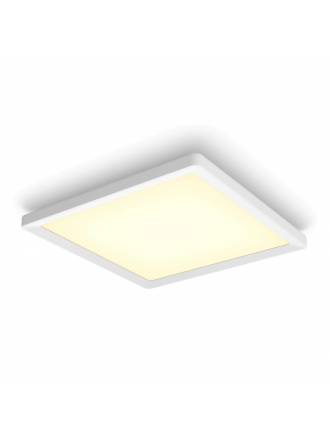
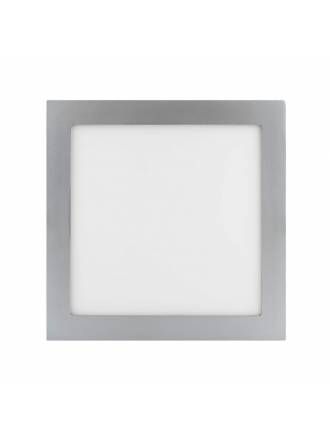
PHILIPS Tento SQ Slim Hue LED warm to cool (2200-6500k) ceiling lamp
- -15%

PHILIPS Datura RD Slim Hue White and Color LED (RGB + CCT) ceiling lamp
- -15%

- -35%

JUERIC Ufo CCT LED Ø30cm ceiling lamp Ultra-slim 2800lm
- -10%


- -20%


- -10%


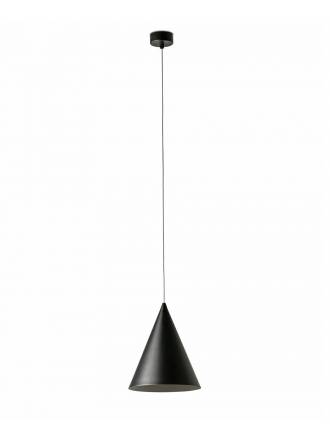
REDO Konos 55cm 1L E27 pendant lamp
- -20%
Kitchen lamps
Kitchen Lighting Catalogue
Kitchen lighting should adapt to the different activities carried out in the space. We do not need the same type of light to illuminate the entire room as we do for preparing food on the worktop or creating a pleasant atmosphere around a table or kitchen island.
In our catalogue, you will find different types of kitchen lighting, from kitchen ceiling lights and recessed spotlights for achieving uniform general lighting, to pendant lights for tables, breakfast bars and islands, as well as LED light bars for installing under cabinets and directly illuminating the work area.
To create a comfortable and well-lit kitchen, the ideal solution is to combine different light sources and adapt each one to the function it needs to perform.
Ceiling Lights for Kitchens
Kitchen ceiling lights provide much of the room's general illumination. Depending on the size, layout and ceiling height, you can choose from ceiling lights, recessed spotlights, downlights or other types of ceiling lighting.
Ceiling lights are particularly practical in kitchens with low ceilings or when you want discreet and uniform lighting, while recessed spotlights allow you to distribute several light points and provide better coverage across different areas of the room.
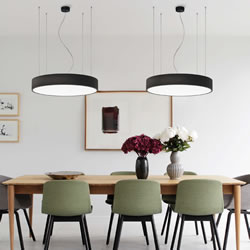
If you have a kitchen island, breakfast bar or table, you can complement the general lighting with one or more pendant lights. In addition to providing direct light over the surface, they help visually define the area and add a decorative element to the kitchen.
Today, kitchen lights are available in a wide variety of styles, from modern and minimalist designs to more industrial, rustic or decorative options. The key is to choose a model that suits the design of your kitchen while also providing the amount and distribution of light you need.


How to light a kitchen properly?+
To light a kitchen effectively, it is best not to rely on a single light source. A good lighting scheme combines general lighting with additional points in the areas where you actually need more light.
For general lighting, you can use ceiling lights, downlights or recessed spotlights to distribute light evenly throughout the room. It is important that they provide enough lumens and are positioned to avoid leaving dark areas.
For the worktop and food preparation areas, it is worth adding under-cabinet lighting using LED light bars or strips. By illuminating the work surface directly, shadows are reduced and you can cook more comfortably and safely.
If you have a kitchen island, breakfast bar or table, one or more pendant lights can provide direct illumination while also adding a decorative element. Their height and arrangement should provide good light over the surface without causing glare or obstructing the view.
It is also important to choose the right colour temperature. 4,000 K provides a neutral and functional light, while 3,000 K creates a slightly warmer and cosier atmosphere.
In summary: plan your kitchen lighting by zones and combine general, task and decorative lighting. The result will be much more comfortable and balanced than trying to illuminate the entire room with a single light fitting.
Can I use different colour temperatures to light a kitchen?+
Yes, you can use different colour temperatures in the same kitchen, especially if each area serves a different purpose. For example, 4,000 K can work very well over the worktop or in task areas, where a more neutral and functional light is useful, while 3,000 K can create a warmer atmosphere over a table, breakfast bar or kitchen island.
The key is to make sure the combination feels intentional and does not create contrasts that are too harsh. If the kitchen is open-plan and the light sources are very close to one another, it will usually look more harmonious to keep the colour temperatures similar or create a smooth transition between them.
How many lumens per square meter do I need to light a kitchen?+
The number of lumens per square meter needed to light a kitchen can vary based on personal preference and the specific use of the kitchen. However, these levels can serve as an approximation:
- General lighting: A light level of between 300-500 lumens per square meter is recommended for general lighting of the entire kitchen.
- Worktop lighting: Food cutting and preparation work is carried out on the worktop. Here, a range between 500-700 lumens per square meter is recommended to ensure good visibility and safety.
- Dining area lighting: To illuminate the breakfast or dining area in the kitchen, a lighting of between 300-500 lumens per square meter is recommended. This area allows greater variations depending on the environment we want to create.